



The technology industry has changed shape, and most people working in it are still working out what that means for them. The pyramid-shaped firm is breaking down, and the firms that survive the next five years will look very little like the ones that dominated the last twenty.
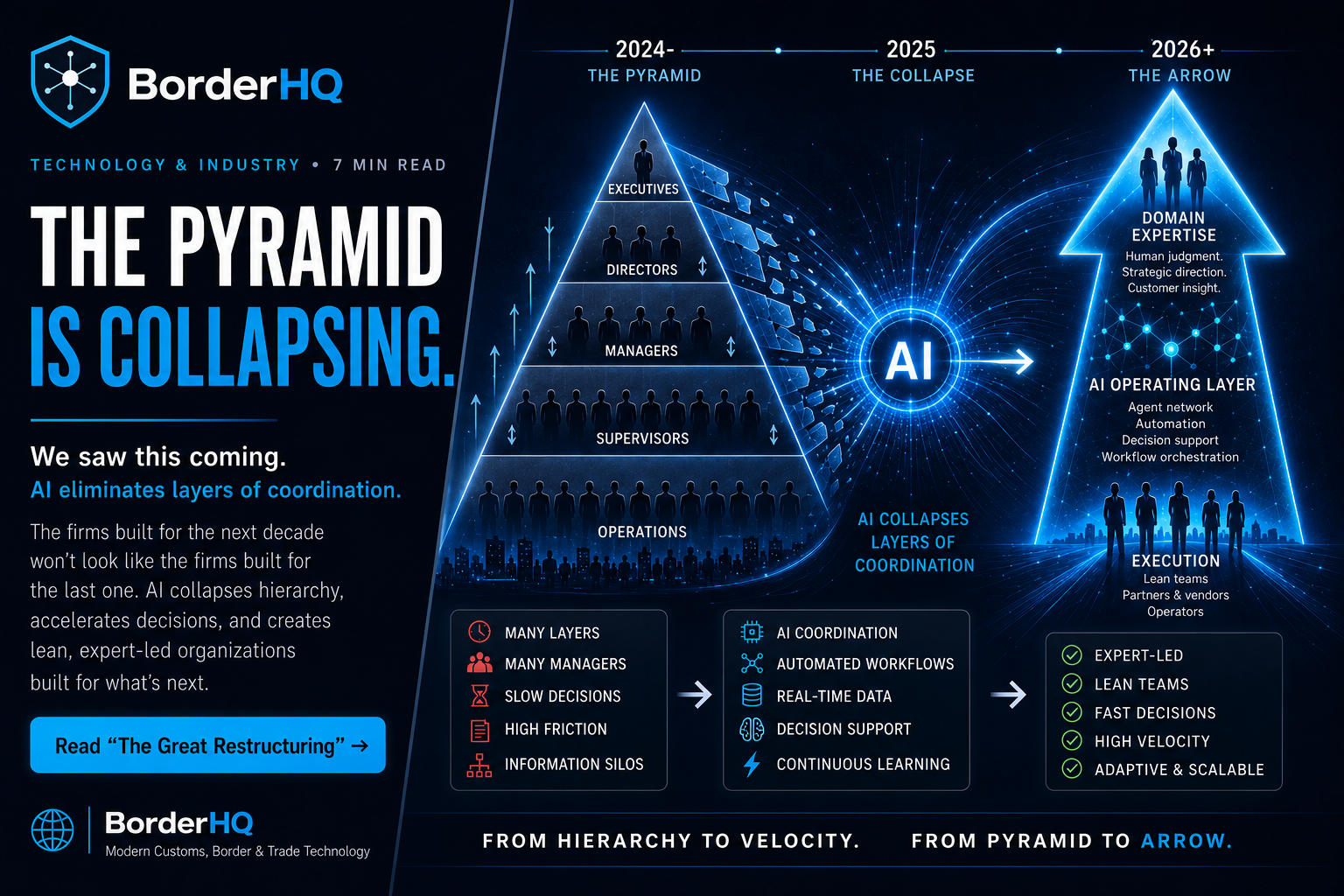
The structural shift: from the headcount-heavy pyramid to the knowledge-led arrow organisation
We have spent a combined five decades working at the intersection of technology and government, building systems, deploying them in difficult operational environments across more than forty countries, and watching technology projects succeed or fail on one decisive factor: whether the people building the system understood the problem they were solving. That question, domain expertise against technical execution, is now at the centre of the most important structural shift in the industry's history.
The Pyramid Model Is Over
The classic technology firm was built like a pyramid. At the base, a vast layer of junior developers, QA analysts, and support staff. Above them, mid-level engineers and project managers. Higher still, architects and business analysts. And at the very top, a small C-suite. The economics made sense in an era when writing code was the scarce, expensive resource. Labour arbitrage, which meant moving development offshore to lower-cost jurisdictions, was how firms competed. The pyramid rewarded scale. Headcount was a proxy for capability. This is how we built and operated our previous firm, TTEK Inc., and for its time it worked.
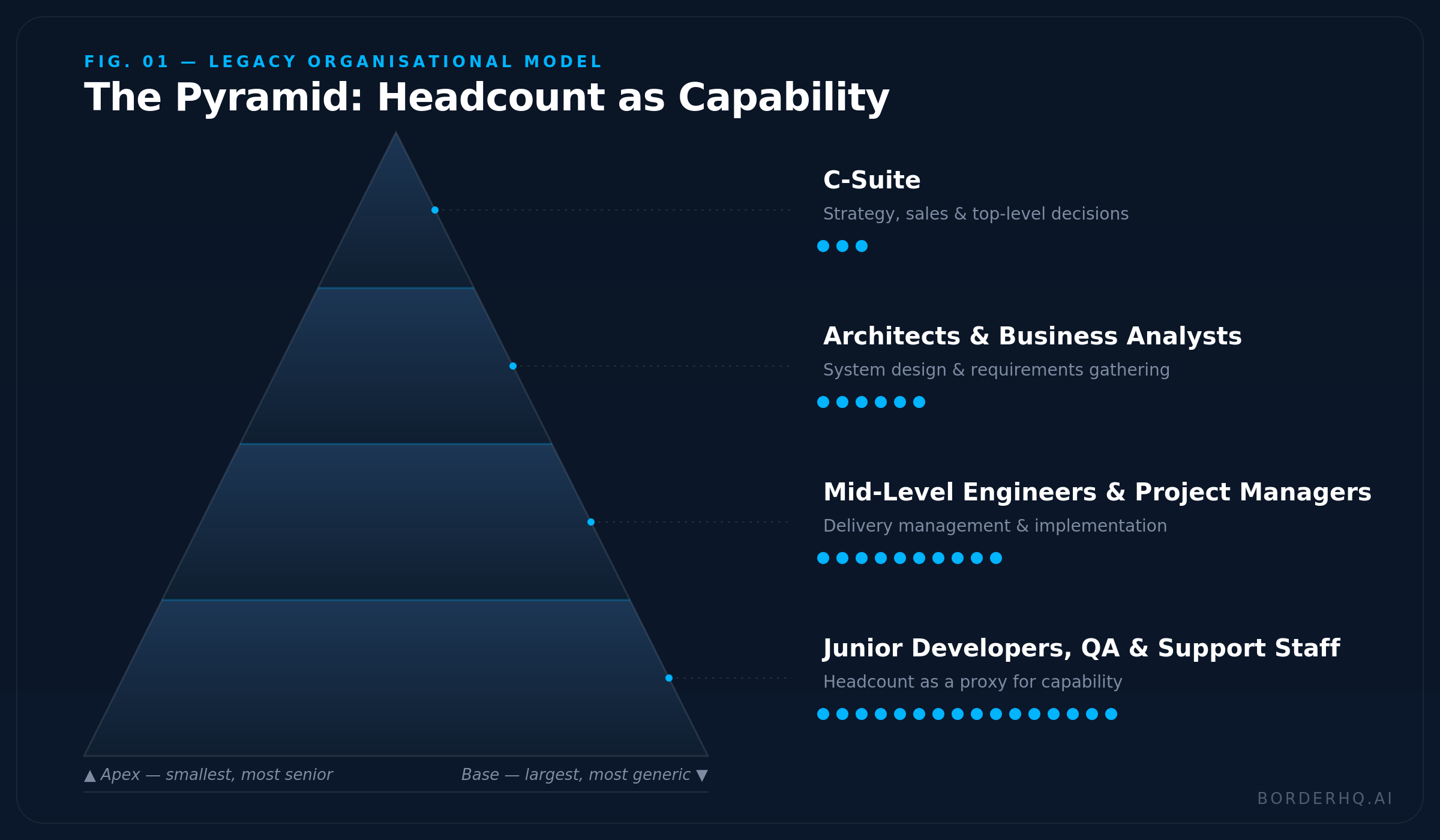
Figure 1. Legacy pyramid org: headcount as proxy for capability
That era ended abruptly. In 2025 alone, 783 layoffs at tech companies affected nearly 246,000 workers, roughly 674 people per day. These are not cyclical corrections. Oracle fired 30,000 developers. Google, Meta, and Amazon followed. In the past 18 months, the tech industry shed over 260,000 jobs. The narrative has shifted, as one industry analyst put it, from "we're hiring" to "we're optimising." (Source: TrueUp.io Layoffs Tracker; "The Great Tech Reckoning," Noah Byteforge, Medium, April 2026)
What is replacing the pyramid looks more like an arrow: sharp at the tip, lean in the body, AI-powered at the base. A point of domain experts and C-suite leadership driving strategy and client relationships. A lean middle of senior Business and Systems Architects who understand the business problems and know how to direct AI tools. Almost nothing sits at the base, because the base is now largely automated.
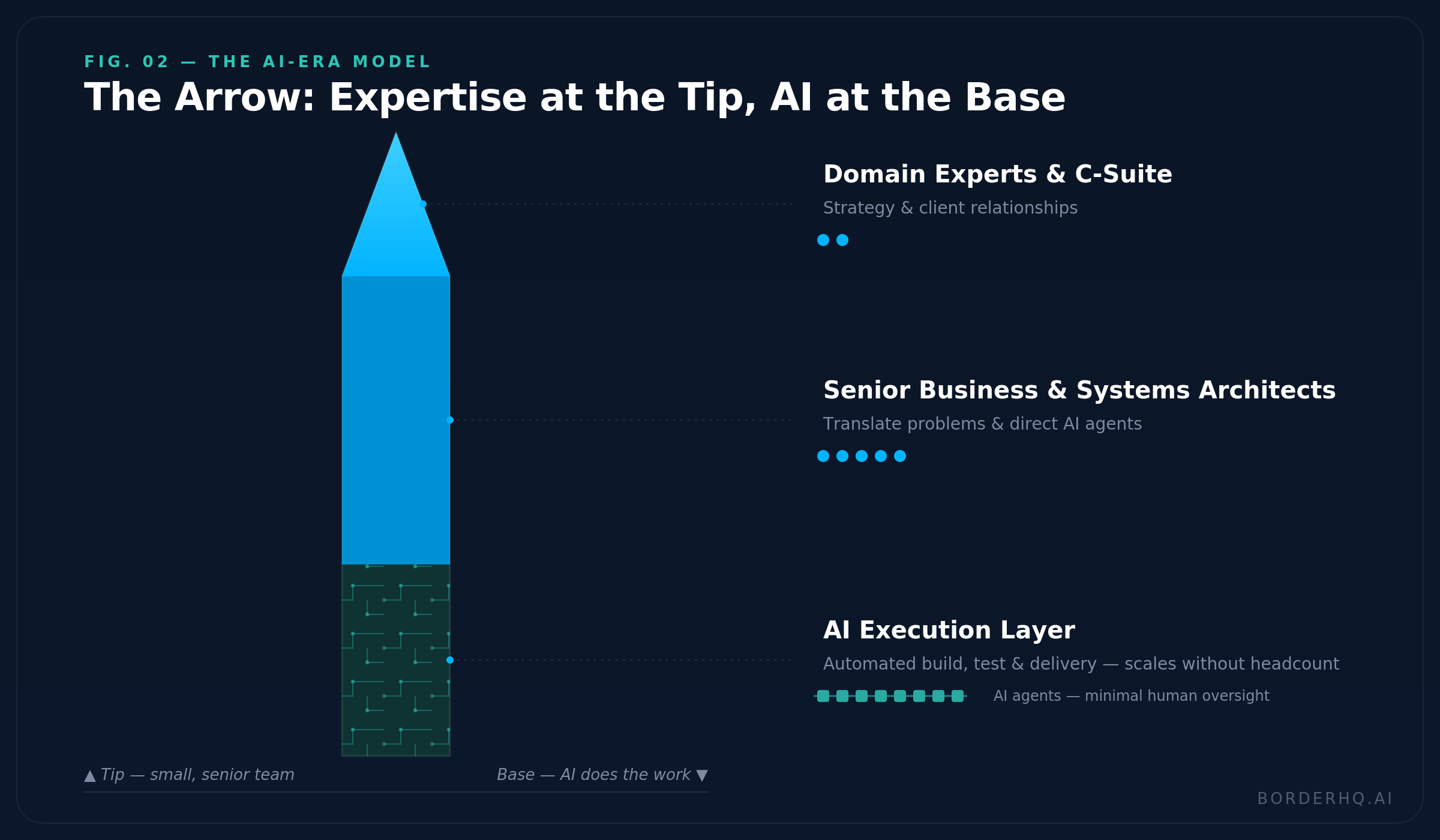
Figure 2. AI-era arrow org: knowledge at the tip, AI at the base
Are Developers Still Needed?
The honest answer is: it depends which developers you mean.
Junior software developer employment for those aged 22–25 is down roughly 20% from its peak, and big-tech new-graduate hiring has fallen 55% since 2019. But overall developer employment for those aged 35–49 is actually up. Companies are hiring fewer juniors and using AI to stretch seniors further. The apprenticeship model, in which junior developers paid their dues writing boilerplate code, learned how systems worked and gradually moved up, has been disrupted at its foundation. (Source: "Will AI Replace Developers? 2026 Job Market Reality," index.dev, December 2025)
Do you recruit developers and then attempt to make them domain experts? Or do you use domain experts and teach them how to be a developer? The consultant who can architect a system, understand business requirements, and direct AI tools to build it is more valuable than ever. The developer whose job was to write the code that AI now writes automatically is facing genuine displacement. This principle forms one foundation of how we have built BorderHQ.
Will Software Development Be Cheaper and Faster?
Yes, selectively. Large enterprises are seeing a 33–36% reduction in time spent on development-related activities, while small companies report up to 50% faster test generation and debugging with AI coding tools. The AI code generation market, valued at $4.91 billion in 2024, is projected to reach $30.1 billion by 2032. (Source: "AI Coding Assistant Statistics & Trends 2025," Second Talent, updated May 2026)
But cheaper and faster at what, exactly? Routine work is being automated: boilerplate, standard tests, API scaffolding and documentation. AI completes routine tasks 55% faster. The problem is that this was never the work that defined software development. It was the work that buried developers.
Complex systems integration, security-critical architecture, and the translation of messy real-world operational requirements into working technical specifications remain stubbornly human. AI makes the coding cheaper. It does not make the domain knowledge cheaper. If anything, it raises its value. This principle also underpins how we have built BorderHQ, and why we continue to recruit customs and border domain expertise from around the world.
The Systems Integrators Are Restructuring
The large systems integrators are not immune. Accenture cut 11,000 jobs in a global AI restructuring, with headcount dropping from roughly 791,000 to 779,000 between May and August 2025, while nearly doubling its AI and data specialist workforce to 77,000 and training more than 550,000 employees in generative AI. The message is unambiguous: fewer generalist developers, more AI specialists, and critically, more domain experts who can tell those specialists what to build. (Source: Gulf News, "Accenture cuts 11K jobs in global AI restructuring," September 2025)
Accenture CEO Julie Sweet confirmed the strategic rationale directly: "We are exiting on a compressed timeline, people where reskilling, based on our experience, is not a viable path for the skills we need." The firm restructured its entire growth model, consolidating services into a single integrated business unit called "Reinvention Services." Its future lies in being a transformation partner rather than a supplier of technical labour. (Source: Fortune Magazine, September 27, 2025; Accenture newsroom, June 20, 2025)
IBM's trajectory tells a similar story. IBM CEO Arvind Krishna confirmed to The Wall Street Journal that the company had replaced the work of several hundred HR employees with AI agents, and its AskHR system automated 94% of routine HR tasks, while redirecting those resources into software engineering, marketing, and client-facing roles. As Krishna put it: "Our total employment has actually gone up, because what AI does is it gives you more investment to put into other areas." (Source: Wall Street Journal / Yahoo Finance; Computing.co.uk, "IBM cuts 8,000 jobs," June 2025)
Domain Expertise: The New Scarce Resource
AI amplifies human expertise rather than replacing it. Industry experts can now test ideas for $15,000 that would have cost $250,000 three years ago. The technology is becoming the straightforward part. What remains difficult, and therefore valuable, is knowing what to build, why it matters, and whether it will work in the operational environment where it has to run. That is why we combine domain expertise consulting with agentic AI: the people who know the customs problem sit alongside the people who build the system.
Chris has led the design of risk management, targeting and selectivity systems around the world because he understood the targeting problem more deeply than anyone else in the room, and could translate that into an architecture that worked operationally. Mike has deployed customs and trade management systems across dozens of countries, advising governments and international organisations as someone who understood both the policy intent and the operational reality. Both now guide a team of domain experts doing the same work, using AI to get more out of that expertise. Large technology firms are pivoting as fast as they can; BorderHQ starts from the model they are pivoting towards.
How Startups Are Positioning in the Reset
In 2020, building a functional SaaS product took a team of 5–8 people and 6–12 months. In 2026, a solo founder with AI coding tools can ship a working product in weeks. AI companies captured 61% of global VC investment in 2025, totalling $258.7 billion. Venture capitalists now prioritise teams that combine deep AI expertise with domain and commercial strength. (Source: "The 2026 VC Playbook," iExchange Substack, March 2026)
For BorderHQ, this is the environment we were built for. We are not trying to compete with Accenture or IBM on headcount, or with offshore firms on hourly rates. We are competing on the one thing that AI cannot yet replicate: three decades of on-the-ground experience in the specific operational environments where our products need to function.
What This Means Going Forward
The firms that thrive will be organised around knowledge, not labour. They will be flatter, leaner, and more dependent on people who understand both the domain and the technology. The old pyramid will continue to shrink. The arrow will become the dominant organisational form.
For developers, the imperative is clear: develop T-shaped expertise. Go deep in a domain. Understand the problems that the technology is meant to solve in the real world. The developers who thrive will be the ones who understand what the code needs to do better than any AI can. That principle is how we hire.
For organisations procuring technology services, the question is no longer how many developers a firm can deploy. It is whether the firm's leadership team has ever operated in your environment, and whether they understand your problem well enough to know when the AI-generated solution is right and when it is plausibly wrong.
BorderHQ Founding Principles
Three principles guide every engagement, every hire, and every product decision we make.
| # | Principle | The Commitment | What It Means |
|---|---|---|---|
| 01 | Domain Before Code | "Every BorderHQ engagement is led by someone who has operated at the border." | We do not deploy technologists who have studied customs. We deploy customs professionals who direct technology. The distinction is everything. |
| 02 | AI Amplifies Expertise Rather Than Replacing It | "AI makes the coding cheaper. It does not make the domain knowledge cheaper." | We use agentic AI to move faster, but every solution is shaped by people who have lived the problem. A system is only as good as the understanding behind it. |
| 03 | Lean by Design, Not by Accident | "We built BorderHQ as an arrow, not a pyramid." | A sharp point of customs domain experts and executive leadership. A lean body of senior architects directing AI. No base of interchangeable coders. The firms that survive this decade will be built this way. We started that way. |
Introducing BorderHQ
The structural shifts described in this article are not abstract trends. They are the precise conditions that BorderHQ was designed to operate in.
BorderHQ is a global customs and border modernisation firm built on a single conviction: that the most powerful combination in government technology today is deep domain expertise, paired with agentic AI. We are lean and domain-led by design, and already working with customs and border agencies around the world to help them target more accurately and move faster than a legacy systems integrator allows.
We have built the firm around that structure, and pointed it at the problems that matter most at the world's borders. borderhq.ai