

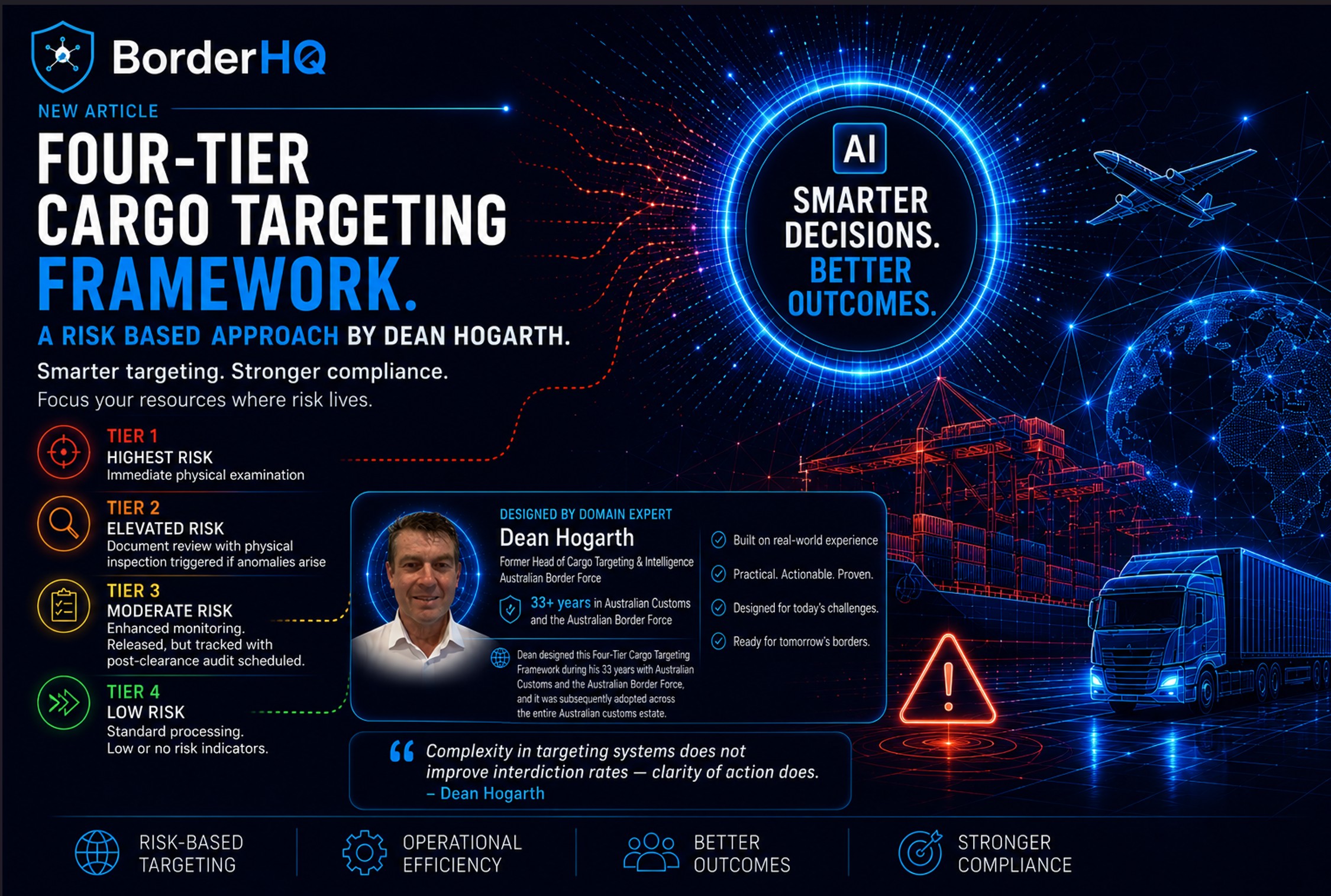
During my 33 years with Australian Customs and the Australian Border Force, I had the opportunity to design a cargo targeting system that was subsequently adopted across the entire Australian customs estate. The four-tier priority rating method for cargo targeting was born from a practical problem: too many containers, too few inspectors, and no systematic way to allocate limited resources.
The approach we developed has since been applied internationally, and I believe it remains one of the most practically useful frameworks for agencies dealing with high-volume cargo environments.
The Problem with Binary Targeting
Most early automated targeting systems produced binary outputs: flag or do not flag. This created two persistent problems. First, at high-volume ports, even a modest flagging rate produces more referrals than inspection capacity can handle. Second, treating all flagged cargo as equivalent ignores the significant variance in risk level within the flagged population.
An officer facing a queue of flagged containers with no further prioritisation will inevitably develop their own informal triage, and that triage will be inconsistent, undocumented and unaccountable.
The Four-Tier Framework
The four-tier method replaces the binary flag with a structured priority rating that reflects actual risk level and dictates the appropriate response:
- Tier 1: Immediate physical examination. Containers with the highest composite risk score, intelligence-driven selections, or known-bad indicators. Inspection before release, no exceptions. Examinations need to be comprehensive and commensurate with the risk posed, utilising all available examination tools and technologies.
- Tier 2: Document examination and possible physical inspection. Elevated risk score or specific anomalies in the declaration. Physical inspection triggered if document review raises further concerns.
- Tier 3: Enhanced monitoring. Moderate risk indicators. Container released but movement tracked and post-clearance audit scheduled.
- Tier 4: Standard processing. Low or no risk indicators. Released through normal channels.
Why It Works
The tiered approach works because it matches the resource requirement to the risk level. Inspection time is the most constrained resource in any customs operation, and the tiers concentrate it on the containers where it will have the most impact. Tier 3 and 4 cargo moves efficiently, which matters enormously for trade facilitation metrics and for the political support that customs agencies need to maintain adequate inspection budgets.
Importantly, the tiers create an accountability structure. Every container has a documented priority rating and a corresponding prescribed response. When a senior officer reviews targeting decisions, they can see not just what was flagged but why, and how it was handled.
Implementing the Framework
Agencies seeking to implement a tiered targeting approach should consider the following:
- The scoring model underlying tier assignment must be transparent and regularly reviewed. If officers do not understand how scores are calculated, they will not trust them.
- Tier thresholds should be calibrated to your inspection capacity. A tier 1 designation is meaningless if you cannot physically inspect tier 1 cargo within a reasonable timeframe.
- Post-clearance audit outcomes must feed back into the scoring model. If tier 3 cargo is generating seizures at a rate that should be tier 1, the thresholds need adjustment.
The framework is simple. Its simplicity is the point. Complexity in targeting systems does not improve interdiction rates. Clarity of action does.